Back

How to Use Simulation to Facilitate the Journey to Port Terminal Automation

Summary

Despite the decades passed since the first automated terminal opened in 1993, port automation is still in its early stages, with only a small percentage of terminals automated and many challenges hindering broader adoption—including workforce retraining, infrastructure readiness, and organizational alignment. Simulation training is emerging as a key enabler for this transition, offering data-driven insights, minimizing operational disruptions, and helping ports build the digital foundation necessary for successful automation.

Even though the first automated port terminal in the world opened several decades ago in 1993, terminal automation is only just gaining momentum. In absolute numbers, we are still at the beginning of this trend, with roughly 3% of all terminals using automation.

In CM Labs’ recent Quayside Chat Beyond Automation: Training for Remote Operations in Modern Ports, Nikola Radisavljevic, the Co-Founder of Zaga Solutions, and Devon Van de Kletersteeg, the Product Manager for ports, utilities, and industrial manufacturing at CM Labs, discussed the landscape of automation and remote operations as it stands today. “The vast majority of container terminals are not automated or have very little automation,” said Radisavljevic during the conversation. “There is only a small subset that is highly automated.”

Among the ports that are considering making the change, questions remain about how to effectively manage such a significant transition. How can a port deploy automated technology without significantly disrupting production? What is the best way to train and retrain staff for their new work environment? What preliminary steps are necessary before considering automation? How can ports achieve buy-in and alignment at all levels to ensure smooth adoption? “It looks different from continent to continent, from country to country, and from port to port, which is one of the reasons why adoption is not always that smooth and is a bit of a challenge,” noted Radisavljevic.

Port terminal simulation—and simulation training more specifically—can provide some of the answers, giving ports some of the structure, data, and processes needed to move forward.

Simulation Training Fosters Digitalization, an Essential Foundation for Terminal Automation

“The prerequisite to even considering terminal automation is digitalization,” said Van de Kletersteeg. This is because data allows port terminals to truly understand and act upon the challenges within their operation. Without the right data, progressing to automation can exacerbate existing problems and even cause new ones.

Digitalizing processes, gaining data on operations, and then effectively interpreting that data to determine actionable solutions is something port terminals can achieve through several different avenues. Radisavljevic noted that, “Putting a simple IoT device on cranes and trucks and then tracking the performance of those assets can help port terminals understand on a much deeper level how their process is run and where any bottlenecks are.”

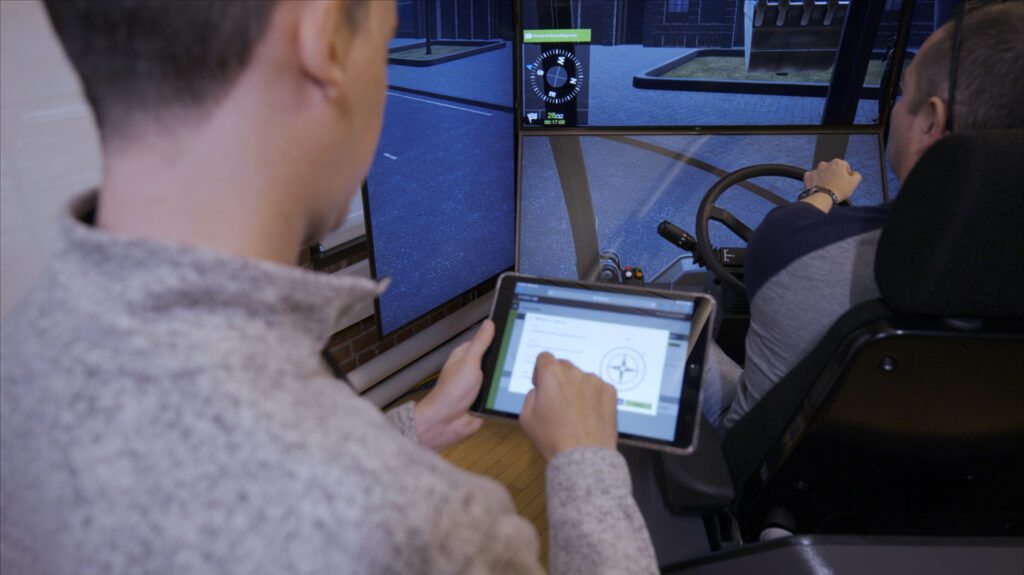
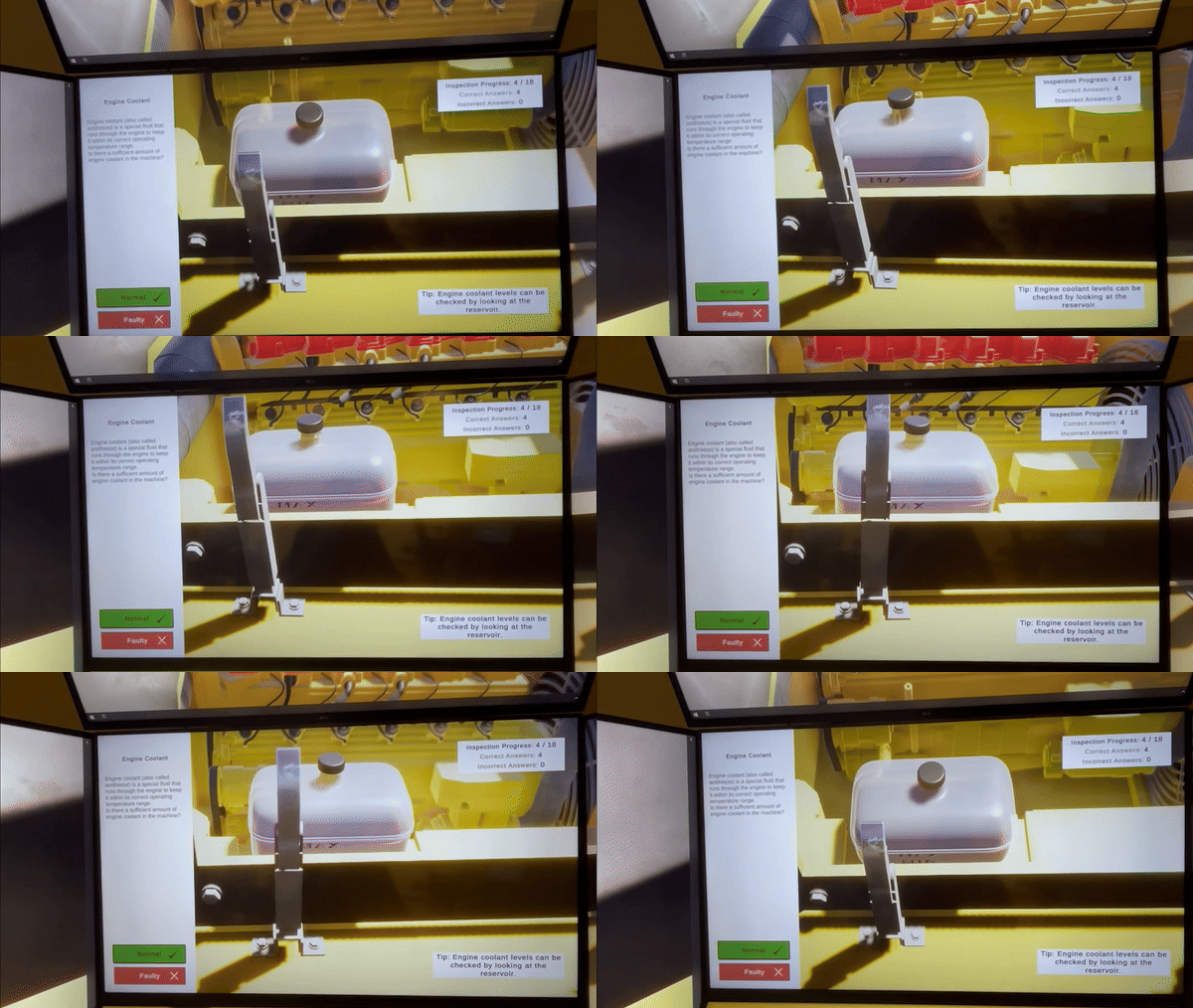
Using simulation for port crane training and other port equipment training—or even remote crane training—can also function as a step towards digitalization and provide ports with a wealth of data. Beginning port crane operator training on a simulator, for example, allows trainers to gain objective insights on trainee productivity. How many containers can crane operators move, on average? How often do they accidentally commit a safety violation? How often are containers handled roughly? With the right simulation training system, it’s possible to answer these and many other questions about performance.

Some simulation training systems are capable of impressive feats with this data. With the right system, it’s possible to:

  • Track training performance over time
  • Aggregate key metrics into easy-to-interpret categories
  • Consolidate data across multiple users and terminals
  • Mass export data for further analysis

As a result, ports can quantify equipment operator performance in ways that are difficult, if not impossible, to achieve by other means. It becomes much easier for terminals to perform an objective gap analysis of workforce skills. This allows ports to adjust training as necessary to meet the unique training needs of semi-automated and automated systems. Within this training ecosystem, ports gain the metrics they need to improve forecasting, enhance processes, and action change.

Port Simulation Training Helps Minimize Disruptions Affecting Productivity

For many ports, the payoff of automation consists of gains in stability and predictability. In fact, productivity increases are not necessarily guaranteed, with some terminals reporting declines in productivity after adopting automated processes. According to McKinsey, ports can experience a 7% to 15% dip in productivity when utilizing automated solutions. However, that same McKinsey report also noted that careful planning and management can help to reverse this trend. The report found that successful ports can improve productivity by 10% to 35% while simultaneously reducing operating expenses by 25% to 55%.

Proper training is often the key to that success. Simulation training gives ports the ability to:

  • Train equipment operators ahead of equipment deployment
  • Train equipment operators without disrupting existing operations
  • Practice rare exception scenarios that may be difficult or impossible to replicate on real equipment
  • Provide continuous training and career development without disrupting operations

In these ways, simulation training helps minimize disruptions to productivity during and after the transition to remote operations.

Managing Workforce Development and Terminal Automation

Labor concerns are a top factor to consider when transitioning to remote and automated solutions. “Technology is not a challenge, surprisingly,” said Radisavljevic. Rather, silos, buy-in, and alignment present the biggest barriers for ports. Radisavljevic added that “if you don’t have the buy-in from people, all of the benefits of automation will not be realized.”

“Very often,” Radisavljevic concluded, “the focus should be on people first.”

These observations are confirmed by the data. According to McKinsey, as many as 75% of ports face a shortage of equipment operators with the necessary experience in automation. Fortunately, simulation training helps to bridge that gap quickly. According to some findings, simulation training can shorten training times by as much as 40%, making it easier for ports to train existing workers and onboard new ones. More than that, though, it demonstrates a commitment to a port’s existing workforce and helps foster buy-in at all levels. With built-in capabilities for introducing simulated equipment malfunctions and other unexpected events, simulators can assist in reinforcing safety rules and regulations, fostering positive attitudes around any shift toward automation.

Equipment operators can also use ROS simulators as a tool for career development and career advancement. “It’s an evolution of their roles,” said Radisavljevic. Rather than remain a crane operator, trainees can work towards a more supervisory role.

“Moving these employees into the remote control rooms and giving them more responsibility as well as giving them oversight over a process goes along with automation… You can argue that the next step is actually for a remote operator to become a process supervisor.”

Looking Ahead to the Future of Port Terminal Automation

For some ports, the transition toward automation and remote operation is not an option at the moment, due to maintenance and infrastructure limitations. As a result, efforts are better spent optimizing existing processes over investigating new ones. Fortunately, even with manual operations, these ports can still compete on the global stage.

For these reasons, it’s easy to wonder if the benefits of automation are worth the investment. According to our survey, opinions are split, with nearly half of respondents saying they aren’t sure if the benefits of simulation are oversold.

Benefits of Port Terminal Automation Poll Results

However, ports that cross the divide may eventually overtake the competition.

“Today some manual terminals can compete with automated terminals in terms of peak performance,” said Radisavljevic. “But in the future, without automation, you’re done because the ports with automation will have the data to improve their processes quickly in the coming years, and they will be outperforming everyone else.”

Radisavljevic added that this perspective is crucial for ports looking to the future. “When deciding, you really have to go a bit deeper and have a long-term strategy.”

Want to learn more about how simulation training can help support the transition towards remote operation and automation? Check out our on-demand webinar Beyond Automation: Training for Remote Operations in Modern Ports.

You Might Also Like: